Proposed Spiritualist Base

John Lett (About) (Readings)

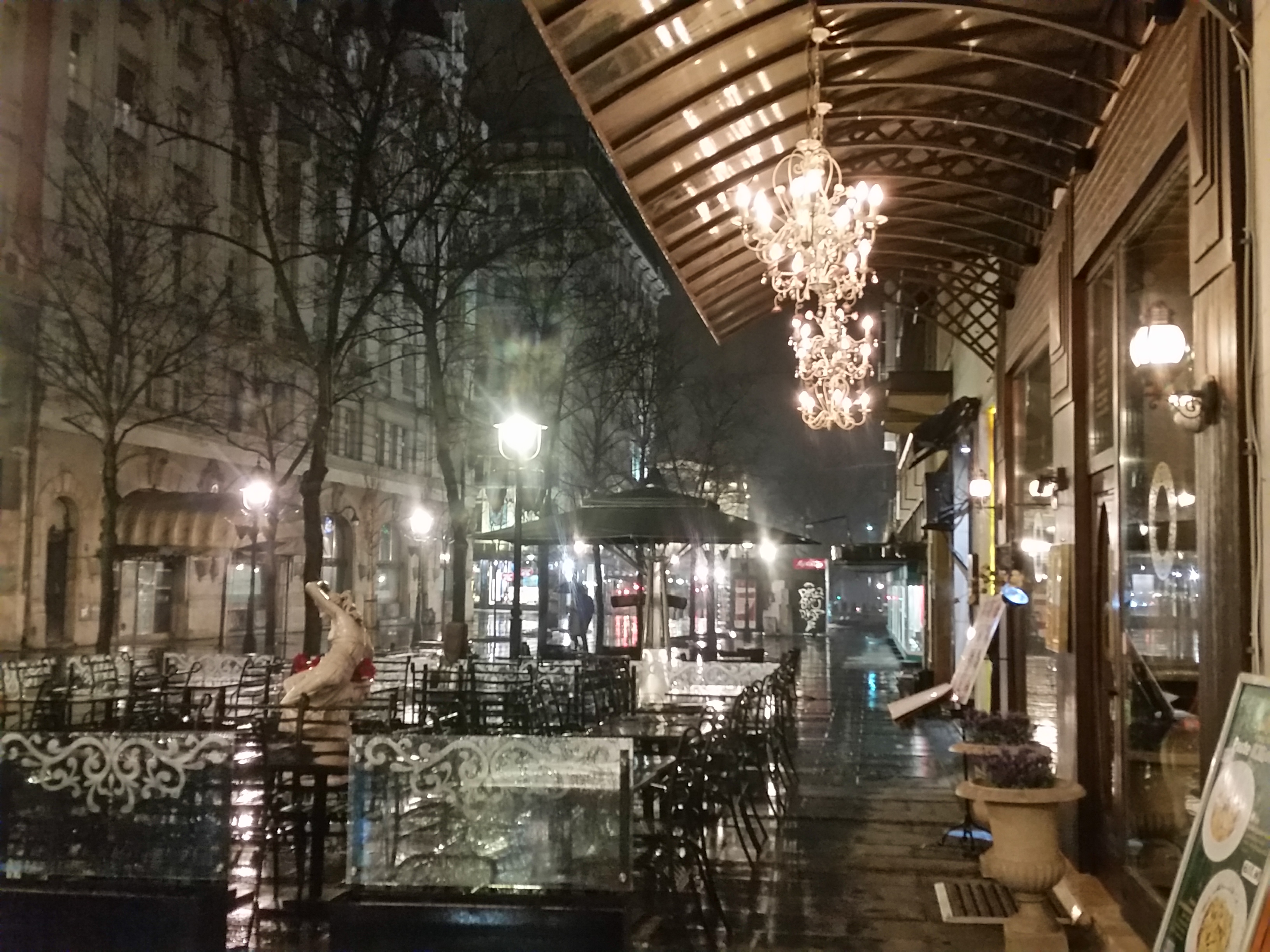
One of my many objectives in traveling throughout Europe, parts of Western Asia, and potentially Eastern Asia once more is to find a base which can attract visitors and give them a sense of solace in tumultuous times (in other words, any period of time). Such a place would need to have a distinct historical feeling, be affordable (or accessible at least), quiet enough for reflection but yet with enough foot traffic to reach passersby, and be a place with distinct values appreciating education and informal decisions. The closest place I have found thus far has been in Heidelberg, Baden-Württemberg, Germany. At this spot, the moderate but changeable weather of rain and shine almost every day, heavily forested grounds, fresh water and natural springs nearby, the international hub of Frankfurt, and the oldest university in Germany all provide an excellent backdrop to making people take care of their health and have the right balance of stimulation to advance their goals spiritually.

You can see many of my videos about the area on my YouTube channel, though one must scroll down a bit as the present videos are primarily set in Turkey.

A relocation or set-up in Germany is more than likely a long-term goal of mine rather than a short-term and may be open to more participants in the following decades. The tarotworldtour concept exists on very humanist terms and traditions, but with further emphasis on individual experiences and realities, as tarot has revealed to me that the future and natural conditions are not fixed elements that we can detect with our ordinary senses, but ruled by complex, unknown algorithms with changeable trajectories. We do not (or should not) eschew capitalism totally, but instead work on removing the powers of many abstract financial instruments and be more concerned with real exchanges of value and a remonetization and reassessment of what is valuable (education, experiences, “the helping professions”) and what is vulgar (war-making, exploitation, addictions).

Do please examine which areas look like good positions for forming the kinds of communities you are interested in creating and see which ideas have legs. Where in the world do you believe you can survive, thrive, or generate the best ideas?

John Lett (About) (Readings)

GENERAL UPDATE: I have received a few letters regarding my 2009-2010 predictions of Mitt Romney becoming the selected Republican presidential candidate. As of now, I have not done a public reading about the continuation of the Obama administration. I believe that at the moment, he is likely to win, as the strategy is to use inflation to create more jobs and stimulate the economy, but as early as 2013 there could be more obvious declines in the economy surfacing. If there is not another war campaign or attack, he is likely to resume the position, but I have been informed (perhaps erroneously) that a new war front will be opening soon. (4.23.2012)
Posted in Uncategorized | Tagged , , , , , , , , , , , , , , , , , , | Leave a comment

1990s Russian Revival: Intangible Bubbles… Approach With Caution or Zeal

John Lett (About) (Readings)

"Amsterdam" by ChrisJunker, 2002, retrieved from http://www.flickr.com/photos/chris-yunker/138241368/.

As I have written in the past, the value of traveling in hostels cannot be overstated. For the last eight weeks I have been holidaying, consulting, and on tour in Europe (Portugal, Spain, Germany, Denmark, the Netherlands, and soon others), and staying in a variety of living arrangements, but the most dynamic has been through youth hostels. In some countries there is some vitality on the ground, but the employment data remains bad because work is often undocumented (Spain), and in others, there is a tremendous amount of construction and infrastructure development happening, but the work contract and full-time, formerly “stable” jobs are disappearing in droves (Denmark, Germany, the Netherlands). In hostels, this is a topic of interest for most people nearing the end of their studies and older, and a lot of information is passed along.

In Amsterdam, Netherlands a few days ago, I was informed that a massive post-Soviet Ponzi investment scheme that ended disastrously in 1994 (MMM) has been revived after its creator has been released from prison. He has adapted his approach to fit the internet/information/knowledge economy age and has been evading lawmakers and banks through entangling them in involvement or masterfully using statutes of limitation. This is a rough take of what was disseminated to me, in the form of a video through my YouTube channel, but which is only available to readers here:

This development in Russia (with other legal battles related to it going on in places such as Belarus) has the potential to effect world markets given that 15 to 20 million investors are now involved and people the world over are looking for alternative investments outside of major currencies and commodities such as gold and silver. What is interesting about MMM is that has a lot of egalitarian, “everyday man” qualities to its branding that would appeal to Russians or those abroad who are tired of oligarchs taking all the big contracts… however, these were the people that lost tremendously in the 1990s.

Though I sometimes use tarot as a means to help investors or those in the financial world decide a direction, all I can say from questions I have asked the cards is that 2012 is “The Year of Opiates” for the Anglocentric world, particularly in the US, where the focus will be on giving a good impression for the elections. You will notice that the jobs data will suddenly appear better and people will be taking riskier investments. Some of them are good to take advantage of, but do not overextend yourself during this build-up period.

Soon the divide will come along the lines of people who want to go further into the sphere of neoliberalism and globalization and those who want to completely remove themselves from it. It is not entirely clear to me which side will dominate or win, but I can see on the ground that most people working alone are doing much better if they concentrate on a small local marketplace or community. Property owners and proprietors without too much overhead and without looking for quick profits are generally the figures succeeding.

A very prosperous spring to you all and I will let you know as the tour extends to other parts of Europe, the US, and possibly Asia this year. It is possible to create seminars if you have in excess of 15 participants who wish to create a spirituality + living-within-our-means event.

John Lett (About) (Readings) (YouTube Channel)

Posted in Finance and Business, spirituality, Tarot | Tagged , , , , , , , , , , , , , , , , , , , , , , , , , , , , , , , , , | 3 Comments

On the Road

John Lett (About) (Readings)

Hi everyone! I am on the road at the moment with some business travel, some details forthcoming of my friend Michelle Goode’s yoga business in Spain, just north of Madrid.

I will not have much time to post here, but my approximate schedule is like this:

  • New York City, USA  (Feb 3-4)
  • Lisbon, Portugal  (Feb 5-7)
  • Madrid, Spain  (Feb 7-9)
  • Aranda de Duero, Spain  (Feb 9-14)
  • Santander, Spain (Feb 14-17)
  • Barcelona, Spain  (Feb 18-21)
  • Berlin, Germany (Feb 21-Mar 2)
  • Copenhagen, Denmark  (Mar 3-18)
  • Hamburg, Germany (Mar 19-24)
  • Amsterdam, Netherlands (Mar 25-29?)

I will have approximately two hours each day to do readings. Any further venues in Europe where speaking or consulting may be required, please give me notice.

Please let me know what you might be looking to read that you cannot find here.

In the meantime, I refer you to my YouTube channel, tarotworldtour, which is primarily spirituality, economics, and social commentary themed, as you will find here.

All the best this early spring!

John Lett (About) (Readings)

Posted in Uncategorized | Tagged , , , , , , , , , , , , | 5 Comments

Tarot of the Day #10: Syria Situation

John Lett (About) (Readings)

Syria features more prominently in our media headlines worldwide, but few people know what to make of what is happening there. A German journalist and media manager from Frankfurt I spoke to a few days ago in Berlin told me that Syria-related headlines are obligatory, but few people want to click on them, whereas Whitney Houston’s death was the most clicks per hour her publication had ever seen, and total clicks second only to the death of Michael Jackson in June 2009. I was informed from this woman that not only is it expensive to send journalists to Syria (and with little payoff in terms of public interest), it is now verboten and that implicates all sides as doing something unsavory.

As stated in the video, I do not know all of the particulars, but the archetypes involved are quite clear to me. The reading for this is quite similar to the results I often get from corporate assessment tarot readings where work teams are assessed and the machinations of agents in the organization are analyzed. We are looking at concerned foreign heads of state, but with some corrupt misallocations of resources and aide and a leader that is very detached.

This is just a cursory view of the situation and the forces at work; something more in-depth would require informed questions.

On the ground in Europe, I have encountered a few people that believe that much of the violence is being staged or forced by foreign influence. The cards do not say that there is a conspiracy, but they do say that it is an impressionable society because the people are not particularly intense or demanding. The cards do indicate, however, that there is some outcome that seems “inevitable” to Syrians and that they are avoiding, but I have no background knowledge to say what this might be – although I suspicion that it could mean an allegiance or affiliation with either the West or Iran.

Perhaps the most interesting factor is that the US and EU seem to come out of this cycle unf

John Lett (About) (Readings)

Posted in Uncategorized | Tagged , , , , , , , , , , , , | 1 Comment

Differences in Monetizing Favors

John Lett (About) (Readings)

At the moment, I am on tour in Europe visiting some friends, speaking occasionally, and doing some consulting work. While continuous travel has kept at the front of my mind that different cultures place value on services and favors differently, there are regular misunderstandings and surprises that still surface.

What is the correct way to go about distribution of favors, especially when you are closely connected with others? Do you offer your services for free? What do you do when someone else offers them without your consent and on your behalf? If favors are exchanged, how do you decide which is more valuable and will require compensating the other party? Complete indifference and hostile responses can damage your reputation and impede the flow of free advertising and word-of-mouth.

It is extremely difficult to uphold a union of sorts, or market rate, when your business activities are not tied to a physical location and you are self-employed. Regardless of cultural expectations of what should be free, shared, exchanged, or sold, having the formalities of paid staff, official channels of reaching the professional (phone, business e-mail), and a business location in the form of an office or retail space often eliminates ambiguities regarding “freebies.” At the same time, one does not want to be stingy and extinguish all opportunities for relationship-building and intimacy.

The greatest cultural and social gap of all is often how appreciation is expressed. In Europe, I know that I am constantly committing grave social faux pas offenses in terms of table manners or order of business, but in turn, I have contributed far too much business and economic advice that is not adequately acknowledged in North American terms. Conversely, in these interactions (or transactions, as I would see them as a North American), the people I am around likely think “big deal” and “here we sit with this eating table barbarian who did not bring something from the US.”

Unless we are dealing with tangible assets (property, commodities), a recognized union/guild protected or regulated body, we furthermore have a harder time regarding value for what it is. I find more and more that most people cannot visualize money saved, and so if you deliver value in terms of savings or a further revenue stream, they are not particularly thankful or aware. Thus, do we continue to deliver this value to help others, or let people play out their negligent behavior?

I do not wish to say “if karma and favors are not returned to you in this life, they will surface in the next” as this is an excuse for corruption and manipulation to play out aggressively upon us all, but a variant of this is true. As someone who does travel fairly extensively, I can say that depending on what your priorities are, if you are wanting to have a mere financial advantage over others, there is considerable leverage added to the table if you stay put and force others to come to you by your lack of movement and accumulation – allowing you to present the image of largesse (“sure you can stay here” – meanwhile getting information from the outside). If it is cultural, information, and business capital and acumen that moves you, you are better off living extremely lean and mobile.

John Lett (About) (Readings) (YouTube Channel)

Posted in Finance and Business | Tagged , , , , , , , , , , , , , , , , , , , , , | 3 Comments

Pleasantries Around the World (Essential Education, Part II)

John Lett (About) (Readings)

If you have spent a lot of time living in other countries or with cultures that are not the culture of your childhood, you will soon realize that no place satisfies you completely. Furthermore, it is easy to make generalizations about a place or its people, especially when something goes wrong. I am often guilty of this, as coming from a sociology background sometimes makes one prone to think in terms of categories or traits.

I have been very ineffective about taking notes when traveling or living in other places, but there are a few major concepts that I have picked out from around the world. Ideally, we could pick out some of the most polite features from every culture and then merge them to make a complete, almost ideal package for international standards. I do realize that we often do not have time or the mental acuity to pull off all of the features, but it is good to be aware. Personally, I try to be cognizant of all that I can, but some I deliberately don’t practice, or forget about until it’s too late.

Observing and practicing a few of the following tips will particularly make social interactions that could lead to business more favorable and conducive to profit for both sides. My apologies to not include other regions here, particularly Australia, but my knowledge outside of Europe, East Asia, and North America is not extensive enough to comment.

EUROPE

This is one huge continent with several very different cultures, but there are a few things that apply in most, if not all of the continent.

  • It is generally rude to ask the question that North Americans often ask, “So what do you do?” To those coming from outside of the North American environment, this is a thinly-veiled inquiry as to how much money someone makes, or what kind of status the person has. I no longer as this question, ever. Instead, if you want to express interest or increase familiarity ask, “What do you have going on in your life now?” or “What are you interested in these days?”
  • This should apply everywhere, but do not flippantly promise or offer something unless you are certain that you can and will offer it.
  • Alcohol is much more readily available, but do not mistake this for a tolerant attitude toward extreme drunkenness.
  • In most of northern Europe, you should remove your shoes when entering someone’s home (I was told this is mostly to do with snow).
  • You can have a political, religious, or other very intense conversation, have differing views, and everyone is still friends. You must not shout, get offended, or feel personally attacked; it is just the way education and perspectives are sorted out.
  • In northern Europe, be very precise about the time that you show up. If you are early, you are expected to help prepare things if other guests are coming. Ireland and southern Europe are much more loose about it, except in perhaps a business context.
  • Rounds – it is very customary for each person to take turns buying each other drinks, and it must go through the entire rotation. To Americans, this is wasteful and scary because it is not very precise.
  • In Germany and Scandinavia, the male should open the door and walk in before the lady as a way to “defend” her.
  • Europeans think it is the way North Americans eat is barbaric, as both hands must be on the table at all times in Europe, and holding utensils.
  • In all but the most high-level deals, straightforwardness, attention to detail, and precision are expected. Most businesses cannot legally withstand any possibility of ambiguities in a deal.
  • Excessive smiling is considered insincere.

Strengths to apply to your life anywhere: Don’t be short-tempered, concentrate on the person and their personal interests rather than their work, ask all people when entering their home if you can wear your shoes inside. Generally, an unassuming nature is appropriate, but you are entitled to have an opinion so long as it is not a personal attack.

EAST ASIA

  • General to the specific. A lot of outsiders will feel like they do not understand where the conversation is going. This is because it is polite to start with very general things and then become more detailed. This is how the relationship is negotiated. In many countries, you will start out with topics like “Do you like Korean food?” etc. Many Europeans and North Americans will be bored to death but this is just building a general connection. Sometimes it is very hard to get a straight answer out of people, and this could be an avoidance because they don’t know how to answer, or they are ashamed of the answer.
  • Almost all intimate relationships or big business contracts will involve alcohol. I know that I missed a few big deals because I refuse to be forced to drink and play games.
  • Rarely will family matters come up in any business deal. However, in some countries, in resumes and cover letters, people will mention how many brothers and sisters they have, which primary and secondary schools they went to, and so on. This gives the employer some idea of the social networks and position in society the employee may have.
  • A contract is not iron-clad. If circumstances change, people see no problem with trying to modify conditions, such as hours worked, tasks, etc. The oral contract supersedes the written in many cases, although a case taken to the court will favor the written contract if it goes that far.
  • In Japan, expect a wide berth when you are walking down the street. People are very spatially aware in that country, and sensitive to society as a whole. In Korea or China, you can be bumped into and no one will say anything.
  • Money is more freely discussed, and people may ask your salary. A yoga instructor friend of mine who is opening several classes in Spain (but who taught in Asia at the same time as I did) said that the Peace Corps and non-profits abroad typically instruct people to respond to the “how much?” question with “I make enough.”
  • For high level deals, you will be expected to drink in order to suss out your real character.
  • Try to make yourself physically and as a presence, as small as possible. In many places, exuberance and “owning the place” is a good vibe to have, but in Asia, you do not want to outstretch your legs or move about too freely, because it is crowded and often one cannot predict the movements of others in an unfamiliar culture. Language affects physical and spatial orientation.
  • It is common for friends to lend each other money.

Strengths to apply to your life or anywhere: Friendships run deeper here, so one must be more involved and committed than in other territories. Play the flattery game, but do not necessarily internalize it. Think big, rather than in contracted dimensions as North Americans and Europeans do.

NORTH AMERICA

While there are differences between the United States and Canada, it can generally be said that North Americans are accustomed to a quicker pace of life where gratification comes more readily. As a rule, the differences can be broken down into Americans being more likely to overreact and become quickly stimulated, whereas Canadians are more likely to under-react. Americans, at this moment, are more stimulated by social issues (politics, wide conceptual issues along the lines of “values”), while Canadians are more stimulated by localized matters (civic or community implications, viruses, contamination, local pollution, etc.).

  • Keep religion or political affiliations off the table in most of the US, as any division is likely to overpower or shift the focus off other interpersonal or business matters.
  • In Canada, do not mention particular details about money before you know the other person very well, as most people will display alarm. It is considered either bad taste or as the introduction to some kind of profiteering venture.
  • It is typically okay to make small talk with people around you in public spaces so long as there is some kind of uniting event (e.g., everyone is waiting for a bus that is now late, or, “prices sure have skyrocketed,” but the latter you might hesitate to mention with all but the oldest Canadians).
  • In the US, time is more sacred than most places. The time is on display in more spaces and places than anywhere else, except maybe Japan.
  • It is not uncommon to eat a meal in the car or to do several tasks at once.
  • Most people speak on their mobile phones very openly and with limited volume control. This is mainstream but many people resent it.
  • It is nearly obligatory for Canadians to visit Cuba at some point. Most Americans do not travel much outside the US, although “middle America” typically visits Las Vegas, as most airlines have special deals to this particular city. If you want to politely engage in conversation with this area, just ask “Have you been able to get away to anywhere this year?”
  • The best inroads to making lots of more high profile business contacts in the US is through churches or the fraternity/sorority system.
  • The declining economy and circumstances is a typical topic, but be careful to allow the American to lead this area, and do not attribute it to a particular person or philosophy – be constructive with possible solutions if you want to remain in a stranger’s favor. Canadians typically believe that Canada is a safe haven from the majority of world turmoil, or that their decline is primarily due to dropping exports to a failing US. To make inroads in a business context with Canadians, just reiterate the platitudes that things are better there “due to the stability and prudence of Canadian banks” and let them lead more controversial directions in the conversation.

Strengths to apply to your life anywhere: The North American belief in abundance is refreshing and can add a lot of vitality to a deal. North Americans, until very recently, were happy and had self-belief, a trait that is endemic and can be revived with some coaxing. Americans can be stimulated by motion, “excited talk,” big ideas, or broad moral talk of values and ideals. Canadians are more likely to be stimulated by ideas of security, predictability, status related to titles in a position (if you are hiring, “director” or “vice president,” etc. is more impressive there), and sometimes an ethical platform – sustainability being a catalyst word. North Americans at present, outside of major cities, give enormous latitude regarding appearances or formal pleasantries, but will often only hire or buy into something if there is a strong belief that the person is in demand, socially popular, or an insider on some level.

My apologies for any over-simplifications, but this text works as a constructive intro to doing business or making connections in these territories.

John Lett (About) (Readings)

Posted in Uncategorized | Tagged , , , , , , , , , , , , | 1 Comment

Tarot of the Day #9: 2012 Tarot Assessment

John Lett (About) (Readings)


Happy New Year to everyone the world over!

This time I have decided to let visuals take over for the most part for this assessment. You are more than welcome to ask follow-up questions that are of global importance.

Overall, I expect 2012 to be rocky, but with a few euphoric highs at times, when competing factions will try to please or terrify populations in many places where it is an election year.

I will be on the road a lot this year, and so if you need a speaker or group session, or simply a boost from our audience, please refer to the About or Readings pages here for information on how to go about this.

We are definitely more on our own now than before, but if we reassess what is valuable this year, this redefines what capital is, and we can instigate a great wealth transfer outside of orthodox money creation and control.

All the best to you, and please enjoy the video!

John Lett (About) (Readings)

Posted in Uncategorized | Tagged , , , , , , , , , , , , , , , , , , | Leave a comment